

The Science (and Limits) Behind Breathalyzer & Field Sobriety Tests in Florida
If you’ve been arrested for DUI in Florida, chances are your case will involve a Breathalyzer test, field sobriety tests, or both. Prosecutors treat these tests as if they are airtight proof of impairment, but in reality, both are far from perfect. Understanding their strengths and weaknesses can make a tremendous difference in how your DUI case is defended.
Breathalyzer tests: What they measure and what they don’t
A breathalyzer test (or breath test) doesn’t actually measure alcohol in your blood. It measures alcohol in your breath and uses a mathematical formula to estimate your blood-alcohol content (BAC). When the machine is working properly, this estimate can be fairly accurate, but several factors can cause distorted or unreliable results.
Common breathalyzer issues
- Poor calibration or maintenance – Breath machines must be regularly inspected and calibrated. If the device isn’t maintained according to strict FDLE rules, the results may be invalid.
- Mouth alcohol – Certain conditions, such as recent burping, acid reflux, dental work, mouthwash, or even breath sprays, can trap alcohol in the mouth and falsely inflate readings.
- Medical conditions – Diabetes, ketosis, GERD, and some low-carb diets can produce compounds that the breath machines mistake for alcohol.
- Improper testing procedure – Officers must observe you for a full 20 minutes before administering the test. If they fail to do so, the reading can be compromised.
Due to these vulnerabilities, a good defense attorney will request the machine’s maintenance logs, operator certification records, and any video that shows how the test was administered. Many DUI cases collapse once these details are examined closely.
Field sobriety tests: More subjective than scientific
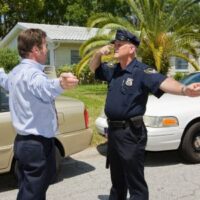
Field sobriety exercises, such as the “walk and turn,” “one-legged stand,” and horizontal gaze nystagmus (HGN), are supposed to measure impairment of normal faculties. But unlike chemical tests, they are highly subjective and depend on interpretation.
Reasons why these tests are so unreliable include:
- Nerves and stress affect performance – Being stopped by police, surrounded by flashing lights, and performing tests on the roadside is stressful for anyone, sober or not.
- Poor or uneven surfaces – Most shoulders and parking lots aren’t ideal testing environments. Cracks, slope, and debris can throw off balance.
- Physical conditions – Back problems, knee injuries, age, weight, and fatigue can all affect performance, even when there’s zero alcohol involved.
- Officer bias – Field sobriety tests rely on an officer’s interpretation. If the officer already believes you’re impaired, their scoring will reflect that assumption.
Since these tests rely so heavily on human judgment, Florida courts often scrutinize them closely. In many cases, video evidence contradicts the officer’s claims, and that can be a powerful tool for the defense.
Talk to an Orlando, FL, DUI Lawyer Today
FL DUI Group represents the interests of those who have been arrested and charged with DUI. Call our Florida DUI defense lawyers today to schedule an appointment, and we can begin discussing our next steps right away.