
Florida DUI Checkpoints: What They Are and What Rights Drivers Have
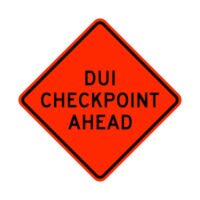
Many Florida motorists are caught off guard when they are stopped at a DUI checkpoint. The flashing lights, cones, and uniformed police officers can be intimidating, especially if you have never been stopped at a DUI checkpoint before. Although DUI checkpoints are legal in Florida, there are specific requirements that must be met. Knowing the way that DUI checkpoints operate, as well as your rights, can be very important to you if you are stopped at a DUI checkpoint and later charged with a crime.
Are DUI checkpoints legal in Florida?
Yes, DUI checkpoints are legal in Florida, but not without specific guidelines that must be adhered to by law enforcement agencies to ensure that the rights of motorists are not violated. If law enforcement agencies fail to adhere to these guidelines, the evidence obtained at the checkpoint can be contested in court.
Unlike traffic stops, checkpoints are not dependent on individualized suspicion, but this is balanced by the need to adhere to procedure.
What makes a DUI checkpoint legal in Florida?
For DUI checkpoints to be valid in Florida, the following conditions have to be met:
- The law enforcement agency has to have a predetermined plan for stopping vehicles
- The vehicles have to be stopped based on neutral criteria (for example, every third or fifth vehicle)
- The checkpoint has to be marked and visible
- The stops have to be brief and non-intrusive
- The stops have to be supervised and documented
The police officers are not allowed to arbitrarily decide when to stop vehicles or extend the stops without cause, and use them for fishing expeditions.
What are your rights at a DUI checkpoint?
Despite the situation at the checkpoint, Florida drivers still have the following rights:
- You don’t have to answer incriminating questions. You can decline to answer questions about where you have been or whether you have been drinking.
- You can decline to participate in field sobriety exercises. These are not required under Florida law, and they are subjective tests.
- You must produce the required documents. You must produce your driver’s license, registration, and proof of insurance.
- You can refuse to take a breath test, but there are consequences. If you refuse to take the breath test, your driver’s license is automatically suspended, and this is something that should be discussed with a lawyer right away.
It is recommended that the driver be calm, polite, and non-confrontational.
When can a checkpoint lead to a DUI arrest?
An officer can extend the stop if the driver shows signs of impairment, such as slurred speech, the smell of alcohol, bloodshot eyes, and erratic behavior. If the officer does not have reasonable suspicion, the driver should be allowed to go free.
If the office exceeds the scope of the checkpoint or does not have legal justification, that can create a strong defense.
Talk to an Orlando, FL, DUI Defense Lawyer Today
FL DUI Group represents the interests of Orlando residents facing DUI charges. Call our Florida DUI defense lawyers today to schedule an appointment, and we can begin discussing your next steps right away.
